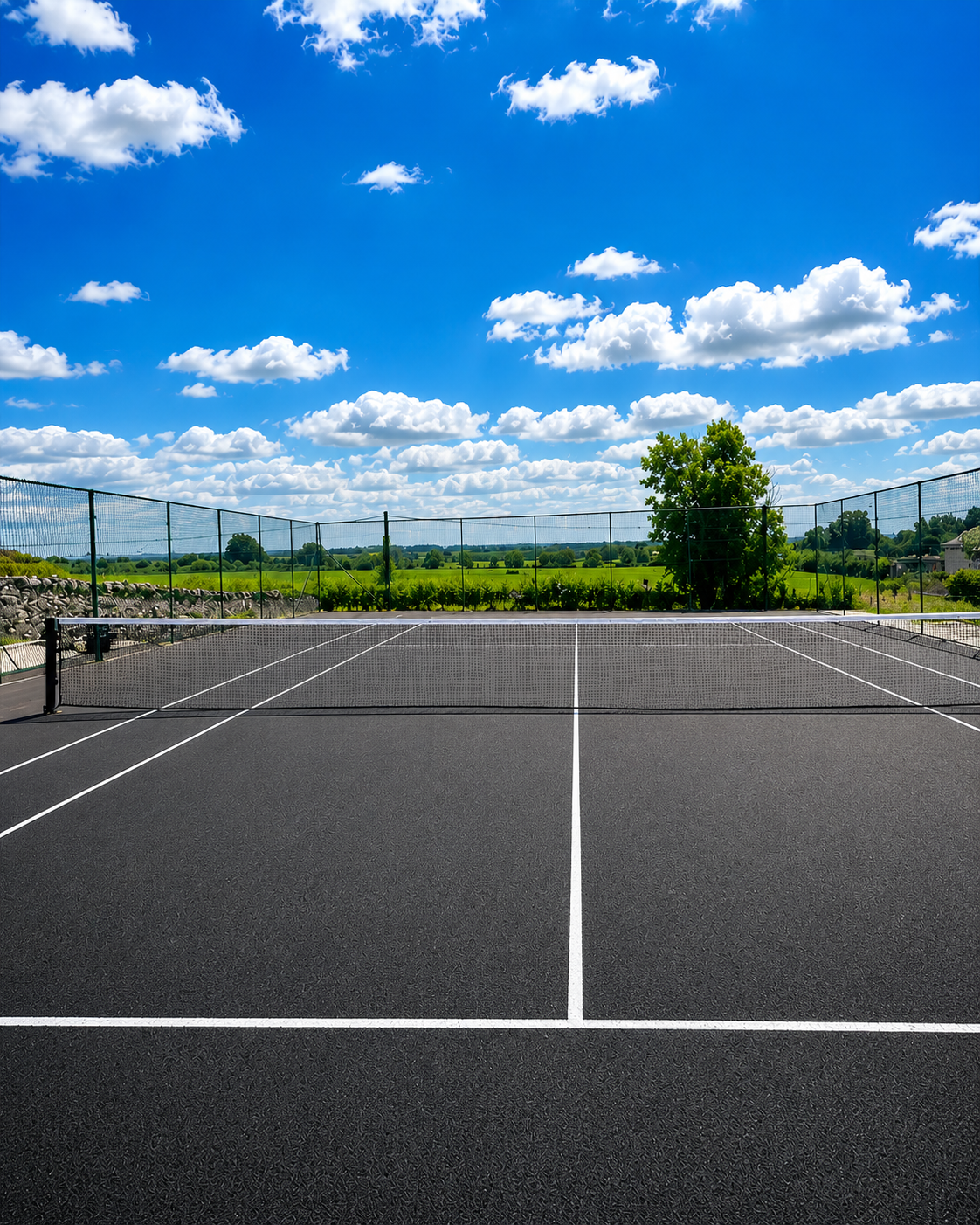
Because these courts were never just a place to play they were, and always will be, the heart of Kilberry.
Long before the courts took shape, before nets were stretched or lines were drawn, Kilberry already held something far more powerful a community that believed in something more.
It was in the warmth of the McKeevers' home, gathered around a simple card table in the late 1940s, that this belief first began to take shape. Between laughter, stories, and friendship, an idea quietly emerged one that would go on to change Kilberry forever.
From that moment on, it was never just about building a tennis court… it was about creating a place where people could come together, belong, and build something lasting for generations to come.
It was Kathleen McHugh later Kathleen McKeever who first gave voice to that idea. At a time when sport was largely centred around boys, she envisioned something different. She wanted to create an opportunity for the young women and girls of Kilberry a place where they too could play, feel included, and be part of something special.
And so, the journey began. By the early 1950s, that vision became reality. The first tennis court in Kilberry was created on a small piece of land near the graveyard, close to the old sheds by the lane. It was simple, but it was theirs. A grass court, a net made from chicken wire, hand-marked lines, and maintained with care and pride by the local community.
A few years later, in the mid-1950s, the courts moved to the site we know today. Once again, the community came together offering land, time, and tireless effort. From the very beginning, these courts were built on community spirit. Families gathered. Friendships were formed. Matches were played in traditional all-white attire, worn with pride and respect.
The Kilberry courts quickly became well known across Meath, Louth, and Dublin. Teams travelled to compete, and locals lined the grass banks to watch, cheer, and be part of something special. A surviving snippet from the Drogheda Independent in 1960 even advertised a fundraising dance evenings filled with music, laughter, and connection.
In the 1970s, the grass courts were replaced with tarmacadam, allowing the courts to thrive for years to come. As a young boy of just 12, Donal McKeever played his part too, digging holes for the trees that would come to surround the courts earning half a crown for his hard work. Decades later, in 2025, Donal would return once more to remove those same trees after they had become hazardous.
Through the 70s, 80s, and into the 90s, the courts were alive with energy. Children, teenagers, and adults cycled up daily, rackets in hand. After matches, many would wander down to Jane Scanlon's for penny sweets and a bottle of Lilt, before heading back for “just one more game.”
Sadly, in the 1990s, increasing insurance challenges forced the courts to close. The gates fell quiet, and over time, nature began to take over. But the spirit of the courts never left. It lived on in stories told, in memories shared, and in the hearts of those who had grown up there.
And then, after nearly 30 years, something incredible happened. In 2022, Donal McKeever, Joe Fahy, and a passionate group from the local community came together with one goal to bring the courts back to life. Not just to rebuild them, but to restore everything they once stood for.
And now, in 2026, that vision is becoming a reality. A new committee has been formed. Fundraising is underway. Grants are being secured. One court is now temporarily open and playable with plans already in motion for three new padel courts and a future clubhouse for all to enjoy.
This is more than a redevelopment. It's a revival of community, of connection, of belonging. This belongs to all of us and the story is only just beginning.